CLUI Sinks Into Borax
BORAX SPANS THE OLD WEST, with its branded 20 mule teams heroically hauling ore across the barren desert—and the new west, a high-tech Mojave of wind and solar energy production and utility scale battery storage, overflown by hypersonic drones (all of which contain a bit of boron). The legend and legacy of borax continues, especially now that it has been declared a critical mineral by the US government.
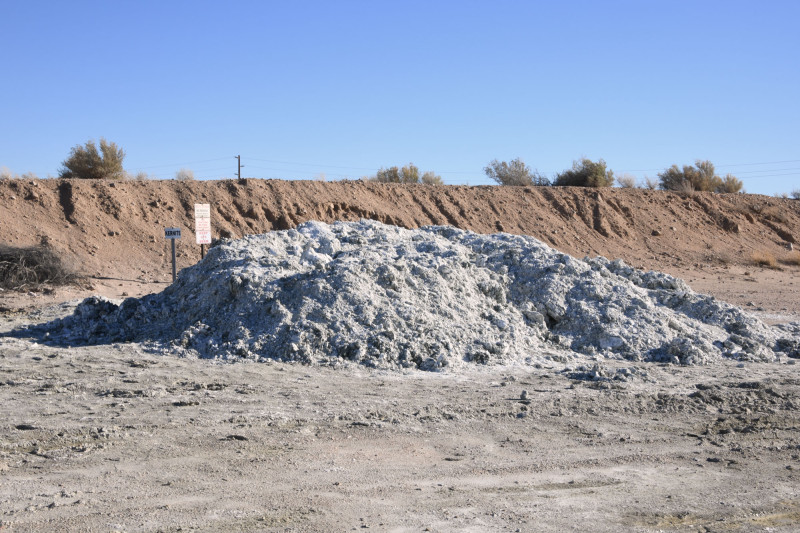
Found on and around dry lake beds in the desert, borax has been used in ceramics for millennia. Today, borax and other borates containing boron are in bleaches, pesticides, fertilizers, wood preservatives, fire suppressants, glass, fiberglass insulation and composites. They are also in high tech metals, rocket engines, nuclear reactor control rods, and cell phones, and are combined with rare earths like neodymium to make super-strong magnets for generators, actuators, and tiny motors, such as those in computer hard drives, car seats, and fighter jets. Borates are used as a dopant in semiconductor production, for LCD screen manufacturing, and to improve the performance of batteries.
In the US, borax is best known as a laundry soap, thanks to the successful marketing of borax’s principal miner and distributor, the U.S. Borax Company, and its 20 Mule Team brand, promoted in a popular radio and television program sponsored by the company, Death Valley Days, which ran from 1945 to 1970, and later in syndication.
Join us here on a journey across the desert, through a mixture of times and spaces, guided, but not drawn, by a team of 20 mules, and the curious connections that this mineral makes. We will begin at the current source of borax, in the Mojave Desert town of Boron, in a place once called Boron Valley.
Boron Valley: The Biggest Borate Pit
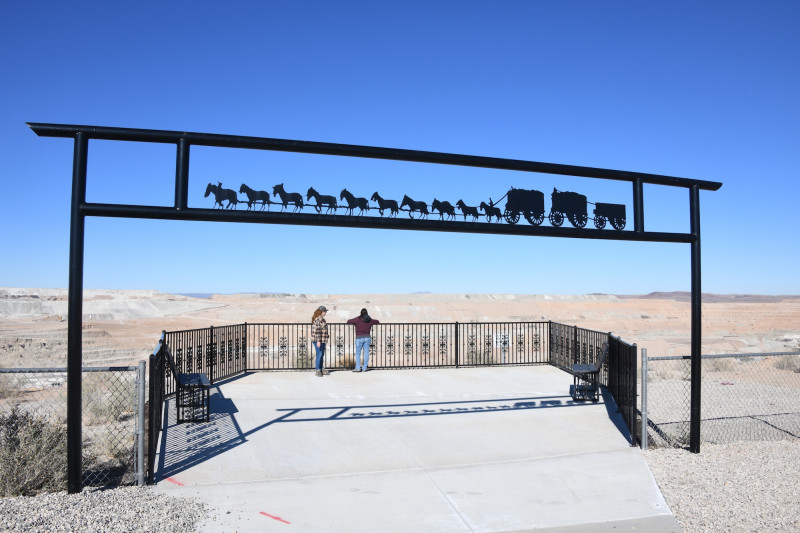
The curtains part at the end of the introductory video presentation at the U.S. Borax Visitor Center, bringing in blinding light, and a view of the overexposed operation below that extends for six miles from left to right. The visitor center provides a good view, as it was built on top of a mountain of rock that that was removed to expose the orebody buried below. A classic overburden overlook.
The mine started as an underground operation in the 1920s by the Pacific Coast Borax Company, which had been mining borax on the edges of Death Valley at that time. In 1927, the company ceased operations there to focus on the Boron Valley’s much richer deposit. By the time the mine became an open pit in the mid-1950s, the deposit was riddled with 200 miles of tunnels. Today the operation covers 20 square miles. Not long ago, this was the largest borate mine in the world. Now a few similarly sized pits in Turkey produce around 70% of the world’s borates, while this mine supplies most of the rest. It is the largest open pit mine in California.
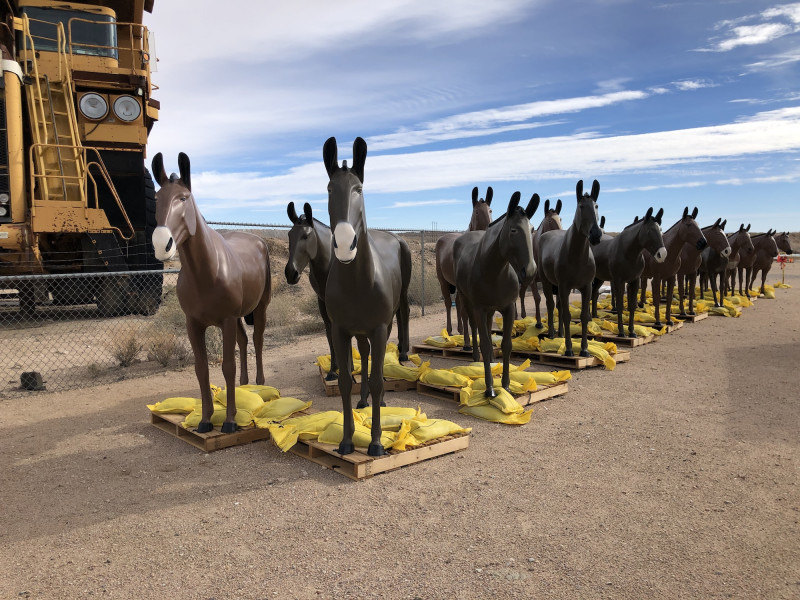
The U.S. Borax Visitor Center opened in 1997, and has not changed significantly since then, as the story has remained, mostly, the same. The pit just has gotten bigger and bigger, as the borax, processed in the industrial plant next to the pit, has flowed into the world at the rate of one million tons a year. Like industrial-scale ants, each of a dozen haul trucks move 200 tons of rock out of the pit at a time, dump it into crushers and conveyors that move it into the nearby plant, which makes it into a powdery form of boric acid and other bulk products. These are loaded directly into shipping containers or the company’s fleet of rail cars that take it to their shipping terminal in the Port of Los Angeles. From there the company’s ships take it to distribution and processing centers in Europe, Malaysia, and China, the largest importer of borates.
In November 2025, soon after boron was added to the nation’s official list of 60 critical minerals, likely increasing the value of its assets, the company announced that its mine, and the rest of its supply and distribution network, was for sale for $2 billion. Interested parties reportedly include Elon Musk, BP, 3M, and BlackRock.
Death Valley: Built by the Borax Legend and Legacy
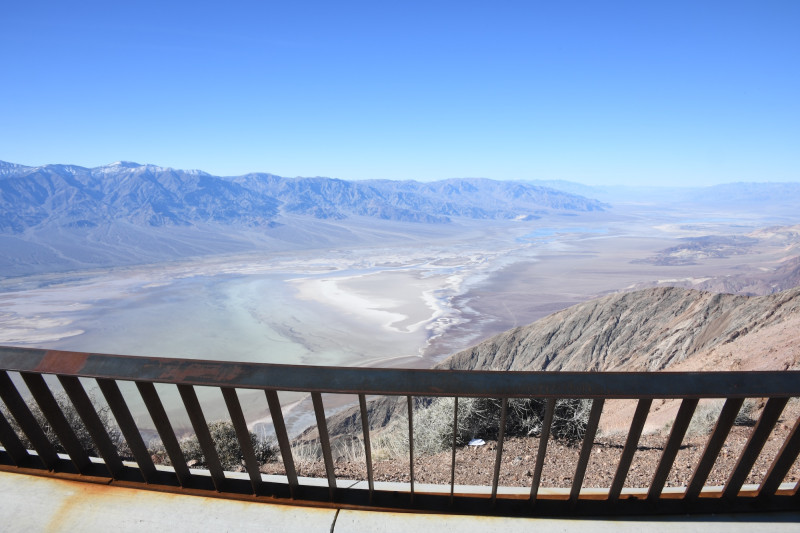
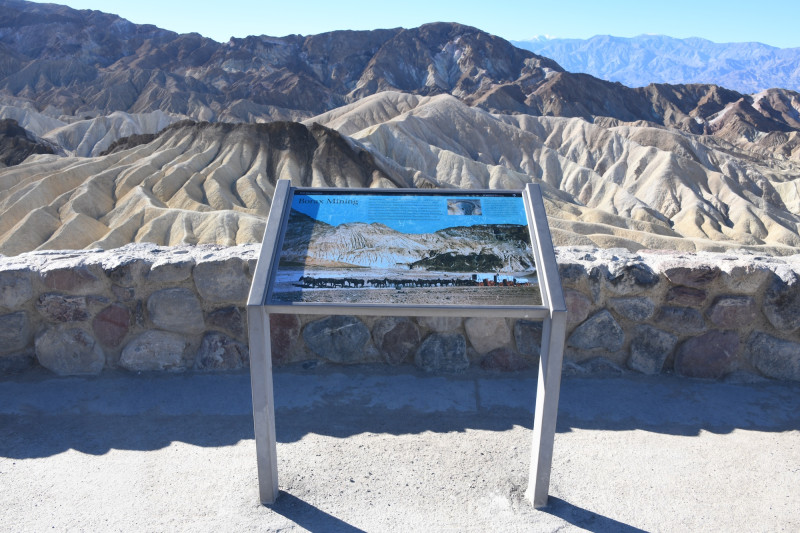
Borates were extracted from salt marshes and dry lakes in the Great Basin in the late 1800s, especially, and famously, from the bottom of Death Valley, the nation’s lowest low point, the last in a chain of connected ice age lakes that once drained the eastern Sierra. The first major operation in the region was the Harmony Borax Works, which started in 1883. From here the romantic image of mule teams hauling large double wagons of ore across the desert to the nearest railhead, ten days and 165 miles away, was born.
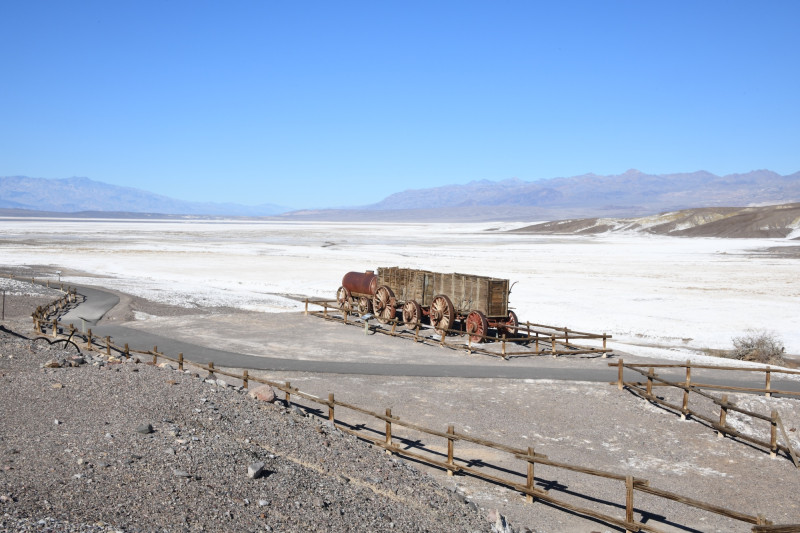
Harmony Borax Works went out of business in 1888, after just five years, and never reopened. It was purchased in 1890 by Francis “Borax” Smith, whose Pacific Coast Borax Company grew to dominate the industry to this day. Rather than haul ore 165 miles across the desert in carts, Smith focused his borax extraction efforts closer to a railway, at Borate, a site near Calico, California. Smith acquired the underground mines there in 1890, and by linking them to the rails at Daggett, Borate became the primary source of borates in the USA for more than a decade.
By 1907 the mines at Borate were played out, and Smith switched mining back to Death Valley, this time at underground deposits in the Greenwater Range, on the east side of the valley, moving Borate’s railway trestles, buildings and mining equipment to the Lila C Mine.
These new Death Valley mines became a larger operation than at Calico. Narrow-gauge railways snaked around the hills, connecting the mines, and hauling ore east, to the Tonopah and Tidewater railway, which Francis “Borax” Smith created to link mines to the national railroad lines to the south, at Ludlow. The company built a refinery and corporate town on the railway at Death Valley Junction, adding an elaborate U-shaped Spanish Revival-style corporate compound with a hotel, dormitories, dining hall, and a community meeting hall in 1925 (now the Amargosa Opera House).
Soon after, though, the large underground borate deposit at Boron was discovered, more than a hundred miles away, and all of the company’s borax mining shifted there. In 1927, the company’s Death Valley area mining operations ceased, and a new plan for Death Valley went into play.
Death Valley Becomes “Death Valley”
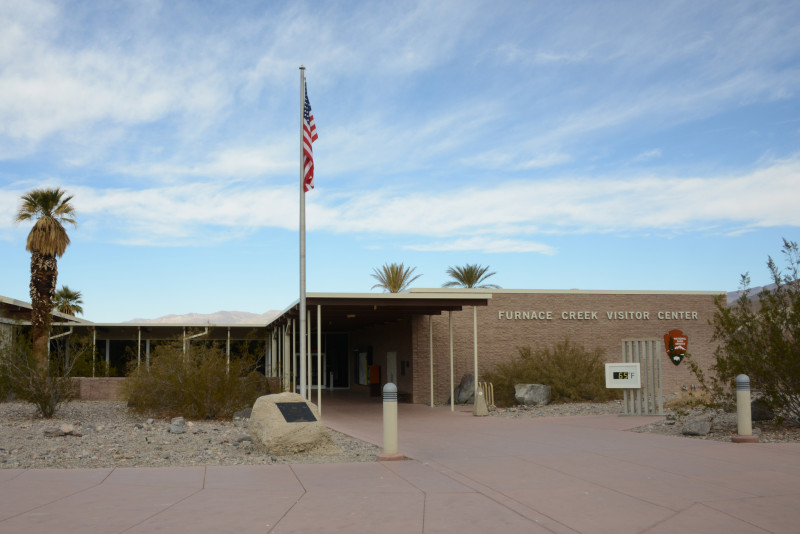
The Pacific Coast Borax Company owned much of what there was to be owned in Death Valley, including the mining town next to its mines at Ryan; thousands of acres along roadways and in the hills; the ranch at Furnace Creek, a manufactured oasis and functioning agricultural operation at the heart of the valley; and it’s corporate campus and refinery on the rail line at Death Valley Junction.
Faced with the end of borax mining in the valley, the company needed a way to enliven and sustain these assets. To do so, it would need to invert its economic model of extraction and removal, to attraction and visitation. To make it work, the company had to sell people on the idea of coming to what many considered the worst place for humans to be, where the official hottest temperature on earth was already on record in 1913 (134 degrees Fahrenheit). In some ways, though, Americans were already sold on hell on earth. It was baked into the Christian perspective, and playing with death from the relative safety of cars was a lot easier to enjoy.
Pacific Coast Borax was a capable marketer of the romantic West. The 20 Mule Team brand, which had been essential to the company’s success, was conceived by its chief marketing director, Stephen T. Mather, who convinced his skeptical boss Francis “Borax” Smith to adopt it for their laundry products. After ten years with Smith, Mather left in 1904 to focus on his own borax company, which he and an associate had started some years before. It prospered, and was bought, begrudgingly, by Smith, a few years later, making Mather wealthier still.
Financially independent, and well connected in the mineral industry and political circles (including fellow members of the Sierra Club, the Boone and Crockett Club, and the National Geographic Society), Stephen Mather became an assistant to the Secretary of the Interior, working on subsidizing and promoting the nation’s federal parks. He helped create the National Park Service and became its first director, in 1917. The basic principles and structures of the national parks were conceived and standardized under his tenure, which lasted until 1929, when he left because of illness. He died in 1930.
While serving in his official capacity, Mather was solicited by Pacific Coast Borax for assistance with promoting Death Valley as a national recreational resource, and as a National Park, to secure and sustain the company’s assets in the region. He visited Death Valley as head of the NPS in 1927, along with his deputy, Horace Albright, and executives of Pacific Coast Borax. Among his recommendations was to have the management at the Old Faithful Lodge in Yellowstone National Park also manage the tourist resorts at Furnace Creek in the winter, when much of Yellowstone was closed, and Death Valley would be at its busiest.
As a former employee, and beneficiary of Pacific Coast Borax, Mather was aware of the conflict of interest that would be apparent if he were more involved, and officially excused himself from further engagement. However, his implicit support, effectuated by others, set the stage for Death Valley becoming Park Service property shortly after his death.
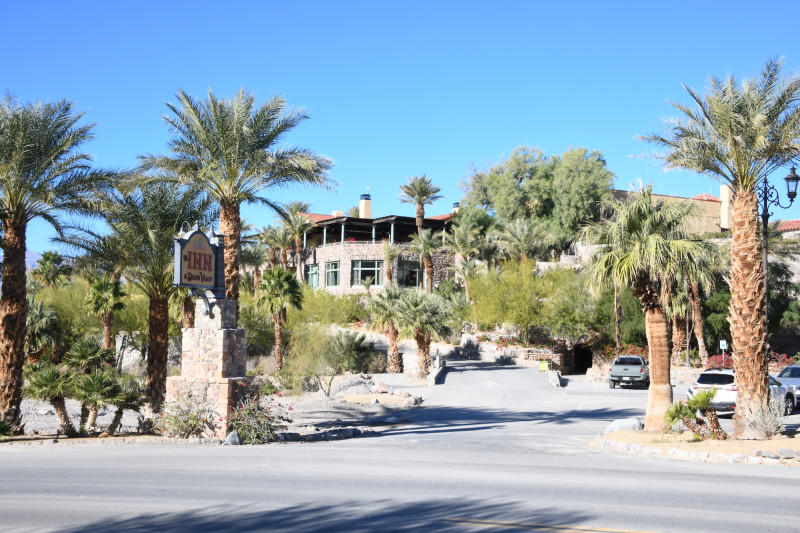
Pacific Coast Borax created a subsidiary called the Death Valley Hotel Company to develop tourist facilities, building the fancy Death Valley Inn near the ranch at Furnace Creek in 1927, and converting existing facilities into tourist hotels and attractions. Tourists rode a narrow gauge railway through the mines at Ryan, where a hotel was established at the former mining camp, and were brought to the valley by rails and carriages from the company’s railway station and hotel at Death Valley Junction. Though progress slowed with the Depression, things picked up under the New Deal with lots of Civilian Conservation Corps activity, especially after Death Valley became a National Monument in 1933, under the tenure of the second director of the NPS, Horace Albright, Stephen Mather’s trusted associate and assistant.
Having fulfilled Mather’s wishes for Death Valley, Albright left his post later that year to run a new company, the United States Potash Corporation, a working partnership with Pacific Coast Borax, to open the first major potash mine in the western hemisphere, next to a dry lake bed in southeast New Mexico. Locomotives from the closed Death Valley mines were shipped to New Mexico, and put into service at the potash mine, which became the largest potash operation in the US. In 1956, United States Potash officially merged with with Pacific Coast Borax, which was then renamed the U.S. Borax and Chemical Company. U.S. Borax sold the potash mine in 1958, dropping the “and Chemical” part of its name, and has stayed focused on its borax production in Boron ever since. Albright remained an executive at U.S. Borax until he retired in 1962.
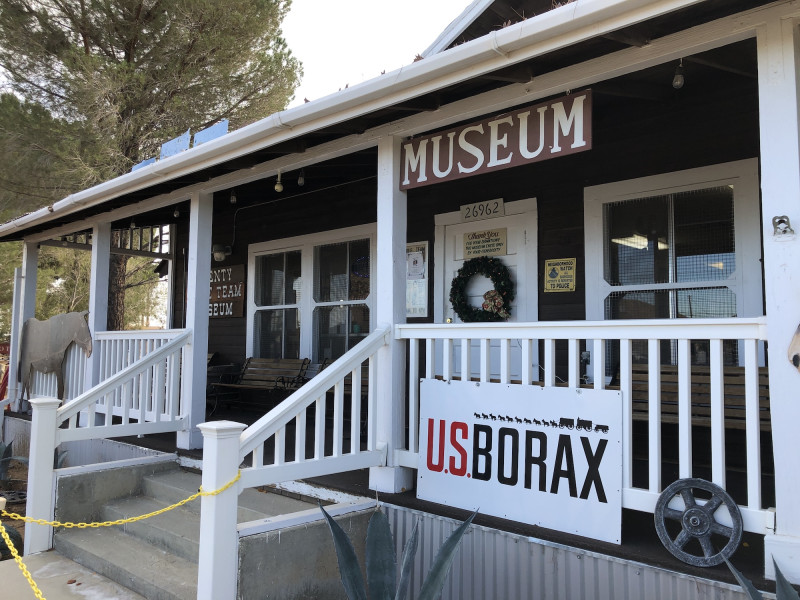
In the early 1950s, U.S. Borax opened the Borax Museum at the Furnace Creek Ranch in Death Valley, with wagons and other mining equipment on display outside. They also shored up the ruins of the Harmony Borax Works, a few miles north, where the only remaining original 20 mule team wagon set from its old days is still on display. In 1956, the company leased its three hotels to the Fred Harvey Company, which ran other tourist hotels and restaurants in western parks and railway towns. Since the late 1960s, the former U.S. Borax tourist services in Death Valley have been owned and operated by a series of corporate concession companies, including today’s company, Xanterra.
Before Death Valley became a national monument in 1933, Horace Albright promised that mining there would not be outlawed, an important point for the owners of mining claims in the region, including Pacific Coast Borax, which had by some counts more than 10,000 claims on federal and private land. After the monument was established, only relatively minor mining activity took place in the nascent park. That changed in 1971, when the Tenneco Corporation turned its Boraxo Mine, near Ryan, into an open pit, extracting a borate known as colemanite, which was not being mined at the big borax pit in Boron. By 1975 the company was producing 220,000 tons annually, from two adjacent open pits in Death Valley, 80% of the domestic supply of colemanite. In 1976, the Mining in Parks Act was passed, which increased the permitting and oversight of mines, and restricted large scale open pits in national parks. Mining in Death Valley was forced back underground.
Tenneco sold its claims to the American Borate Company, a partnership with Owens Corning, which uses borates in glass and fiberglass products. The company developed the Billie Mine, near U.S. Borax’s Ryan mining camp. The mine, under construction for a few years, opened in 1982, accessing an ore body 1,200 feet underground. It operated until 2005, when it was the last commercial mine to operate in Death Valley (which by then was a full-fledged national park, and had been since 1994).
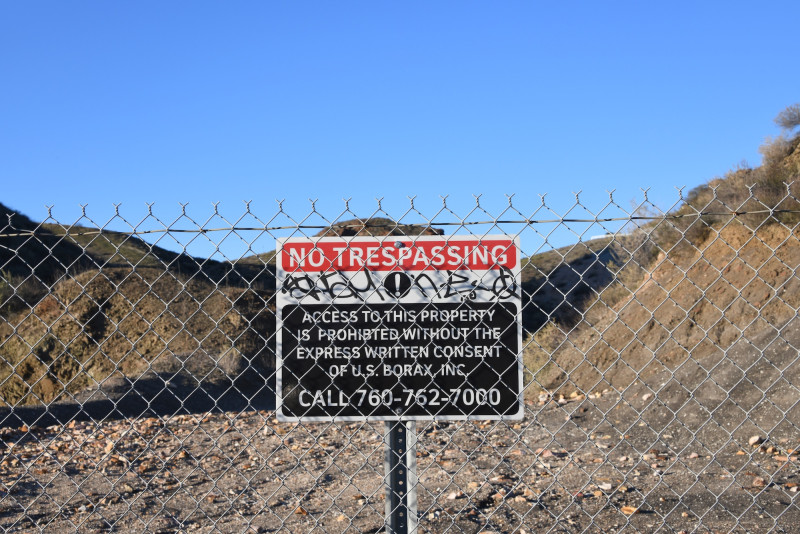
Though U.S. Borax stopped mining in Death Valley in 1927, it kept Ryan, its borax mining camp on the edge of Death Valley, initially as a hotel, then as a retreat, used occasionally by educational groups and field studies programs. In 2013, the company handed over the title and keys to the Death Valley Conservancy, a recently established non-profit which had been working with U.S. Borax to take over the site, and its many buildings, for years. Though it has not yet opened to the public as promised, the conservancy produced a new 20 mule team wagon train replica for U.S. Borax, which has appeared in parades like the Rose Bowl in Pasadena, promoting and celebrating borax and Death Valley heritage. When not out on parade, the $400,000 replica is on display in a new building at the Laws Railroad Museum & Historical Site in Bishop, California, the Owens Valley town where, incidentally or not, NPS director and U.S. Borax executive Horace Albright was born and raised.
Searles Valley: Powdered Borate Soup
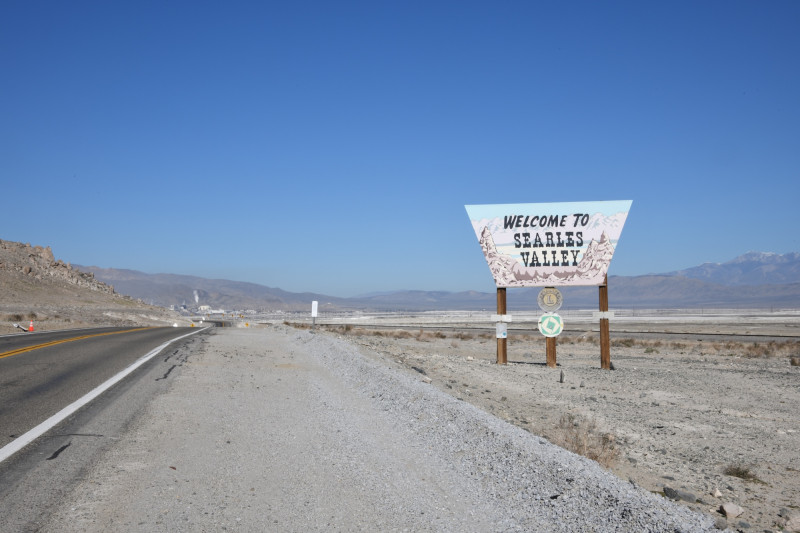
Searles Lake, the large dry lake in Searles Valley, forty miles southwest of Death Valley, used to be known as Borax Lake. It has been, and continues to be, a major source of borax for more than a century. The lake was first mined in a big way for borates by John Wemple Searles in 1873, using 20 mule teams to haul the ore long before Francis “Borax” Smith made such teams famous with his Death Valley borax branding decades later. Searles also hauled farther—all the way to the port at San Pedro, 179 miles (14 miles more than the Death Valley teams)—at least until the Southern Pacific Railway made it up to Mojave in 1876, 76 miles from Searles’ Borax Lake plant.
These two borax companies, Searles’ San Bernardino Borax Mining Company, and the Smith’s larger Pacific Coast Borax Company, produced most of the borax mined in the US in the late 1800s, and they competed directly until 1897, when Smith bought out Searles’ operations and shut it down. After Smith lost control of Pacific Coast Borax to his British partners in 1913, including its assets at Searles Lake, he focused on his many other businesses, mostly in the San Francisco Bay Area, while also trying to restore his prominence in the borax industry.
In 1920, Smith outbid Pacific Coast Borax to develop a borax mine near Las Vegas, and built the West End Chemical plant at Searles Lake to produce borax and soda ash from the lakebed. The West End plant was the first modern borax plant at Searles Lake, and substantially expanded, it continues to produce borax to this day.
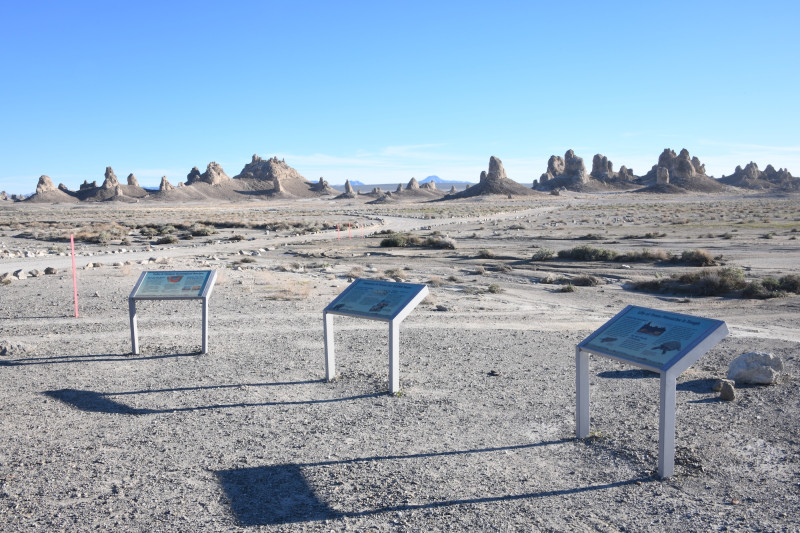
Most of what is produced at the large industrial structures at the north end of the lake, around the town of Trona, are borate and soda ash products, including trona. Like borates, soda ash was used historically as a laundry and cleaning agent, and in glass production. Chiefly sodium carbonate, soda ash is a base chemical for a variety of industrial and commercial products, including water treatments, food additives, and fertilizers.
The modern buildup of industry in the Searles Valley started with a trona plant in 1908, which gave the town of Trona it’s name. In 1914, the railway came to the valley, and operations ramped up, including one of the first mineral-based potash plants in the US. At that point, Germany controlled industrial potash production, and in the lead-up to World War I, other nations were scrambling to refine mineral potash for fertilizers and explosives. The potash plant opened in Trona in 1915, and a year later, in a partnership with Pacific Coast Borax, production was up to 36,000 tons.
By the end of the war, in late 1918, there were more than 100 potash plants in the US, most of which closed when cheap German potash came back on the market. The Trona plant, however, continued making potash, and was ready when the surge in domestic demand occurred again in the build-up to World War II.
Plants in Trona kept making potash until 1996, along with borax, boric acid, soda ash, and sodium sulfate. Most of the mineral extraction is done by solution mining: pumping water into layers of ore in the sediments under the surface of the lake, through drilled wells, and returning the water to the plants for processing, then back out again, through many miles of pipe criss-crossing the lake surface. Evaporation ponds on the lake surface also help to concentrate and isolate minerals, and dispose of unwanted salts.
The various plants in town and at Westend have been owned by a few different companies over the years: the American Trona Company became the American Potash and Chemical Corporation in 1926, which became the Kerr-McGee Chemical Corporation in 1969, then the North American Chemical Company in 1990, then the International Minerals and Chemical Corporation (IMC) in 1998. Then, finally, in 2004, with all the plants under the same ownership, the new company was called Searles Valley Minerals, and the name has stuck, so far.
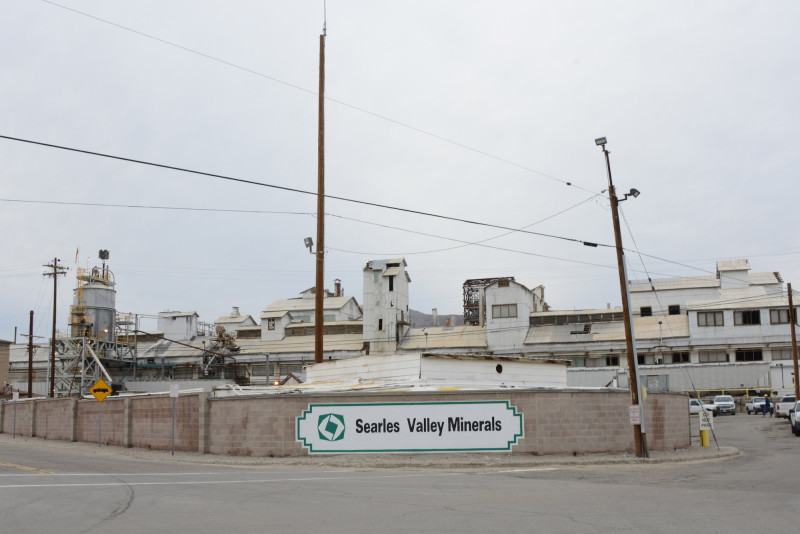
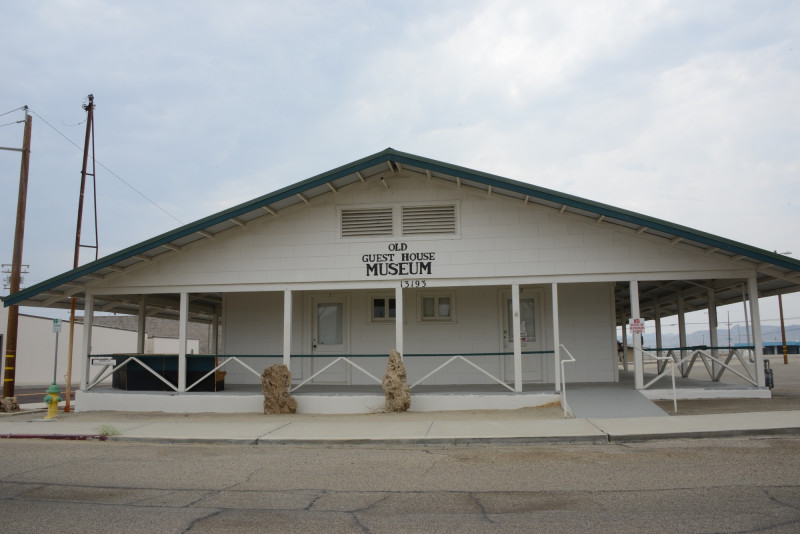
Since 2007, the company has been owned by the privately held Nirma Limited, based in Ahmedabad, India. It ships 1.75 million tons of product out of its US plants, by rail and truck, around a third of which are borates, making it the second largest producer of borates in the nation, behind the U.S. Borax mine in Boron, which ships around one million tons of borates annually.
One reason Searles Lake is so rich in minerals is that it received much of the ice age drainage from the Owens Valley, which drains the east side of the Sierra Nevada, as far north as Mono Lake, and has mineral-rich 14,000-foot mountain ranges on either side, 10,000 feet above the valley floor. During the ice age, glaciers scoured the the edges of the valley, grinding rocks into powder, which was carried downstream with the glacial melt. The valley’s hot springs and vulcanism mixed other elements from hot fissures deep underground into a minerological soup that contains almost all of the naturally-occurring elements on the periodic table.
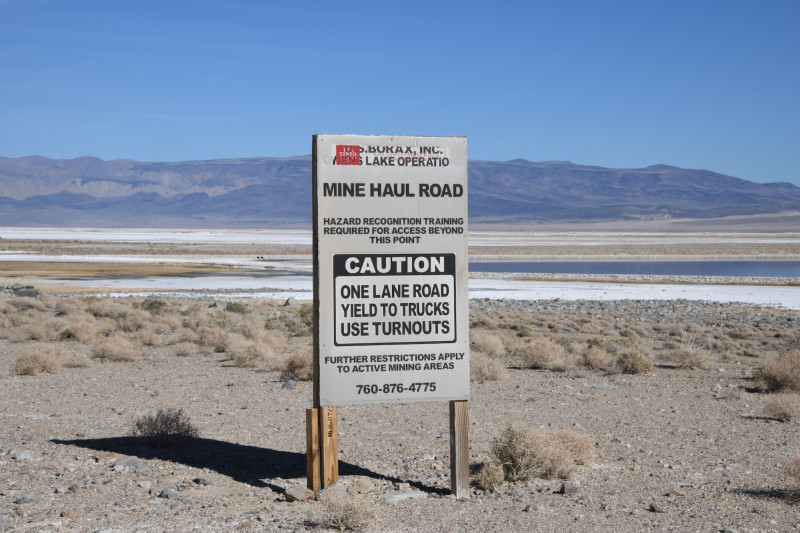
With time and movement, these minerals separated themselves to some degree by particle size and type. Some stayed in Owens Lake, at the bottom of the valley (where sediments extend another 10,000 feet below the surface), while others were washed onward, through today’s Fossil Falls and Little Lake, into the Indian Wells Valley, and China Lake. With this low-walled basin filled up to its brim, drainage would flow through today’s Poison Canyon into the Searles Valley.
Searles Valley, with its high walls, was often the end of the journey for the load of minerals from the Sierra Nevada and Inyo mountains, and was where the finest and lightest grains suspended in water would drop out, forming layered beds on the terminal lake’s bottom over the course of a million years or more.
Sometimes even the Searles Valley would fill up beyond its brim too, and the waters would flow into the Panamint Valley, then through Wingate Pass, into Death Valley, and Badwater, the true pluvial end of the chain of pleistocene lakes. Nowhere else to go.
Back on the Mule Path: The 20 Mule Team Rides Again
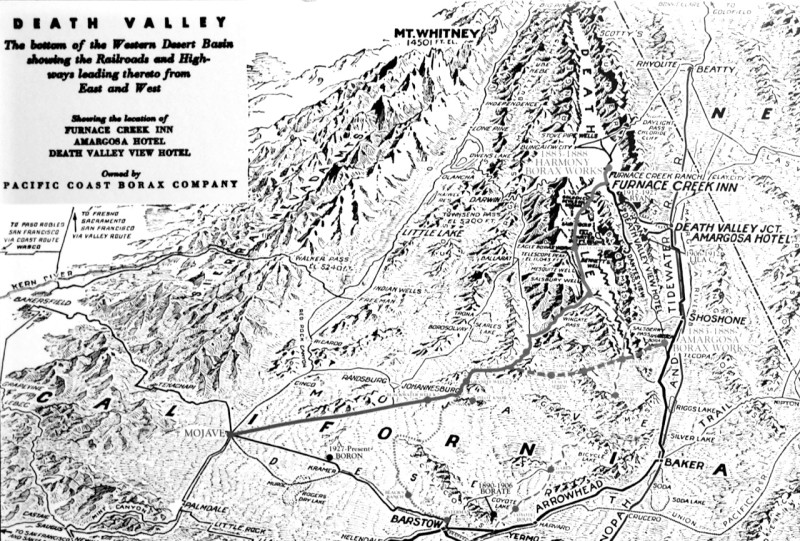
The infamous 165-mile-long schleps of the 20 mule borax teams, from Death Valley to the railway at Mojave, started in the spring of 1884, and ended in the spring of 1888, when William Coleman’s business empire, including the Harmony Borax Works, collapsed. The teams lasted much longer in legend than in fact.
During those four years, five separate 20 mule teams hauled around 22 tons of borax each, in two wagons, on every trip, taking ten days to get from the Death Valley borax works to Mojave, then ten days to get back with supplies, passing by one another every few days, going to and fro. Operating for nine months of the year, this equals around 275 trips, hauling around 6,000 tons of borax over the entire four years. (Today, the U.S. Borax mine and plant in Boron ships twice that amount every day.)
If a mule team were heading for Mojave with a load of borax today, they would find a very changed world, of course. Leaving from the reconstructed ruin of the borax works, the team would pass the modern amenities of the ranch at Furnace Creek, including campground, visitor center, airport, golf course, hotel, cabins, swimming pool, museum, stables, restaurants, solar plant, and a hundred trailers and buildings for worker housing (many of which came from the housing stock left from building the Boulder Dam).
The team would head south along the west side of Death Valley, past the base of Telescope Peak, then turn up the wide alluvial fan of Wingate Wash, leaving Death Valley over the southern end of the Panamint Mountains, through Wingate Pass. At this point, today, they would be inside the China Lake Naval Weapons Center, heading south into Pilot Knob Valley, where low-flying naval jets engage with land based electronic scoring systems, rocket batteries, mock convoys, and other test and training targets.
A few miles past Pilot Knob, a prominent landform used historically for navigation, the team would leave the naval station grounds, and after topping off the water tank at Blackwater Well, it is a nearly perfectly straight path for the last 50 miles, all the way to Mojave. Much of this stretch travels through what for a while was called Boron Valley, after Boron was discovered there. Though unknown to the borax haulers of yore, the mule team’s trail comes within ten miles of the mine today.
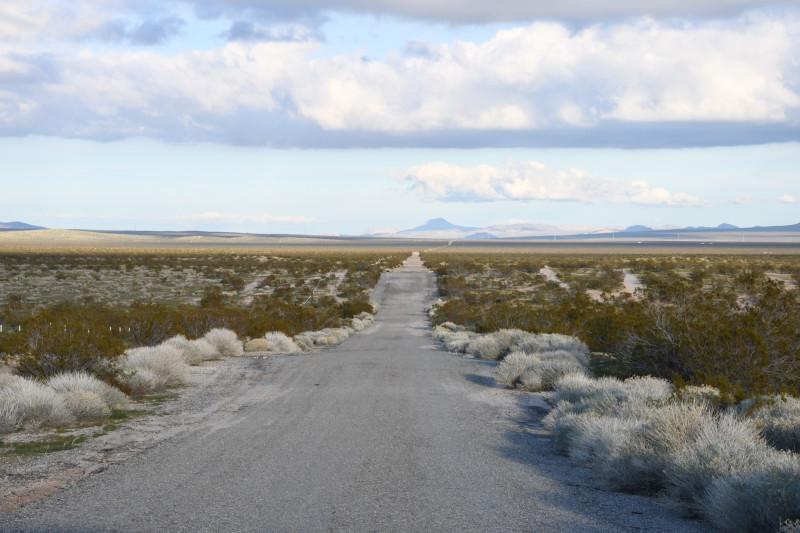
Crossing Highway 395, this bee-line becomes a wide dirt road full of pits and mounds from off-highway vehicles. Officially named the 20 Mule Team Parkway, the road is the aspirational central artery for California City, a so-far unrealized desert development, started in the late 1950s, with room for as many as 400,000 residents. The city covers more than 200 square miles within its city limits, making it the third largest city in the state, in area, but with a population of just 15,000, most of whom live in a cluster in the center of town, still more than 20 miles away.
Out here on the fringes, grids and curving cul-de-sacs are etched into the ground across thousands of acres of open desert scrub, like suburban furrows, yet to sprout, and where ATVs buzz around like hopeful bees. The first buds of habitation along the Parkway are some of the most ephemeral, and perennial: a place called Seraphim Ranch, where the annual BEquinox festival is held most years, a desert party with artists in full flower, which some call LA’s Burning Man. It’s on a quarter-mile-square section of open desert that spans the parkway, owned by the Los Angeles League of Artists, with its own microgrid for encampments that sits empty most of the year.
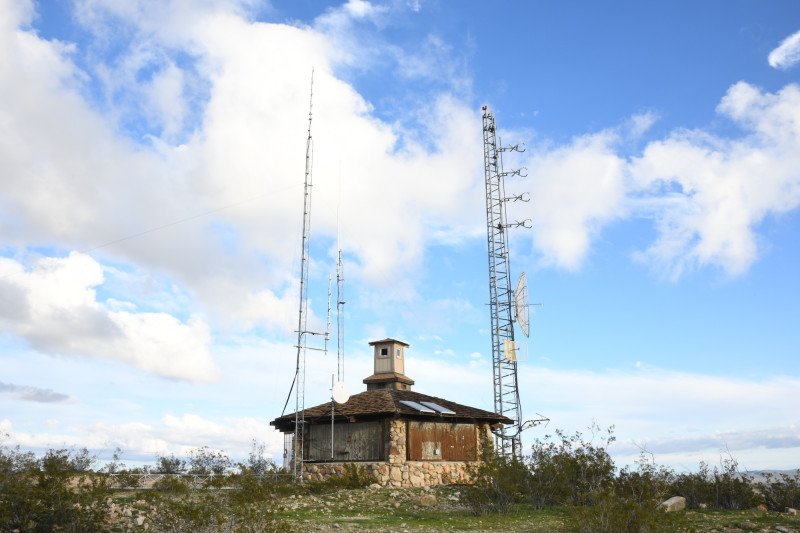
A few miles further along the parkway is Galileo Hill, with a commanding view of the surrounds. This is where the visionary founder of California City, Nat K. Mendelsohn, would come to hone and share his vision for the future great city in the desert, starting in 1958, after he purchased the first 82,000 acres. Mendelsohn named the hill after his hero, Galileo Galilei, the Italian astronomer and polymath, and had a hexagonal look-out shelter built at the top of the hill. It still stands today, though it has been turned into a windowless and secure building, housing telecommunications equipment, and topped by radio antennas.
Galileo Park, at the northern base of the hill, was the designated anchor for the eastern part of California City, while Central Park anchored the downtown. Over the years, the “second city” around Galileo Park never filled out as hoped. A more Western-themed real estate entity, the Silver Saddle Ranch, took over in the 1980s, and stepped up marketing efforts, promising prosperity for those dreaming for the California Dream. The company would buy tax-delinquent empty lots at auction for as little as a few hundred dollars, and sell them to trusting buyers and investors, from as far away as Korea, for as much as $50,000, with hefty financing charges too. Many of the buyers were poor, and couldn’t keep up the payments. And with most of the thousands of undeveloped lots appraised at around $2,000, there was nobody to sell the lots to. Little could be done but to default, and the cycle continued.
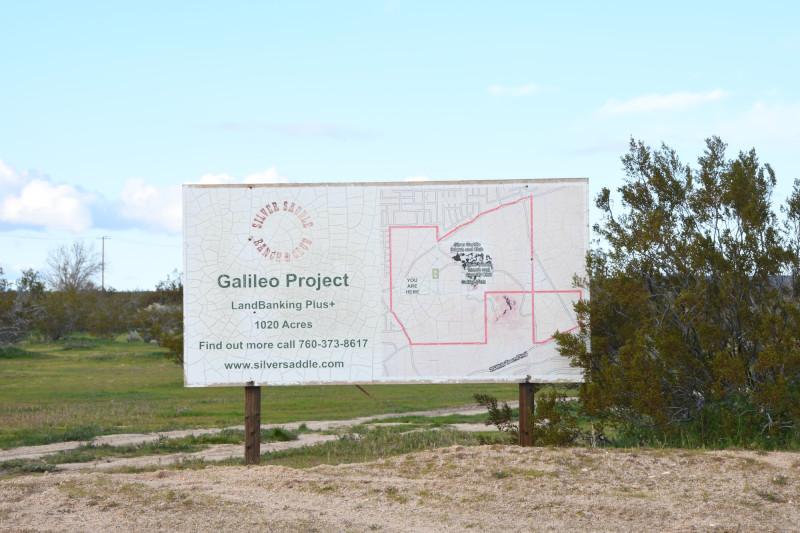
In 2022, the state filed criminal charges against a number of people in connection with the project, and the showpiece of the development, the Silver Saddle Ranch at Galileo Park, has fallen into ruin. The landscaped ponds and trails are dried and cracked, and unwatered trees have collapsed on to buildings, now with broken windows and open doors. A modern Western ghost town. Having seen speculative mining booms and busts in the Death Valley Days, the 20 mule team passing by today might not be that surprised.
Borax Bill Park straddles 20 Mule Team Parkway five miles further down the road. This is a different kind of park, a kind of interstitial parking lot that serves as a threshold between the street-legal vehicle world, and the off-highway vehicle world. A place to get the toys off the trailer, read the posted rules of the non-road, head for the hills, and hose off in the public showers when you get back. It’s also where first aid is available, and the Desert Incident Response Team has a forward base to help deal with inevitable mishaps. Services which would have been appreciated by the muleskinners in days of yore for sure.
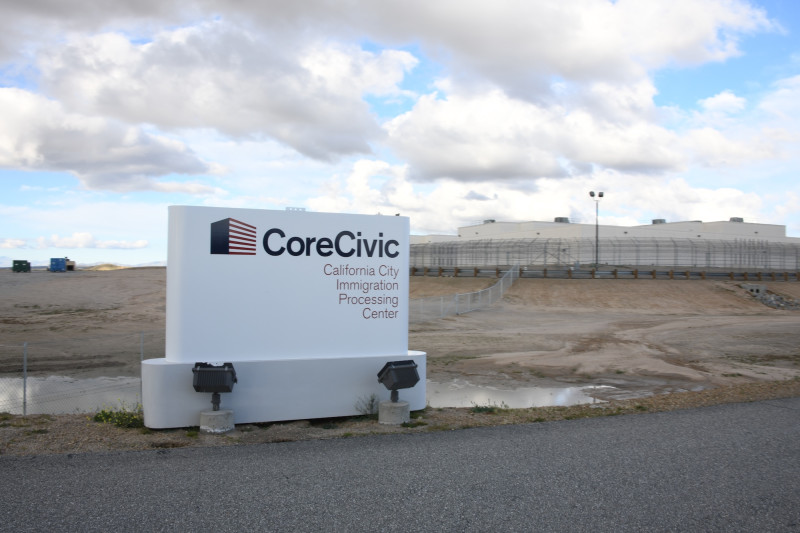
Just another mile or two down the road is the densest settlement in the whole of California City: California City Correctional Facility, a looming concrete fortress, lit up at night and visible for miles around. The facility was built and operated by the Corrections Corporation of America, and opened in 1999. It has a capacity of more than 2,000 prisoners, and housed federal inmates until 2013, and state inmates after that until 2023, then closed in 2024. It opened again in 2025 as the California City Immigration Processing Center, one of a half dozen federal detention centers in Southern California, holding around 7,000 detainees, 1,300 of them here (as of February, 2026). The Corrections Corporation of America was renamed CoreCivic, in 2016, and is one of the largest private prison companies in the US, with dozens of facilities, in several states—many that are now housing immigrant detainees.
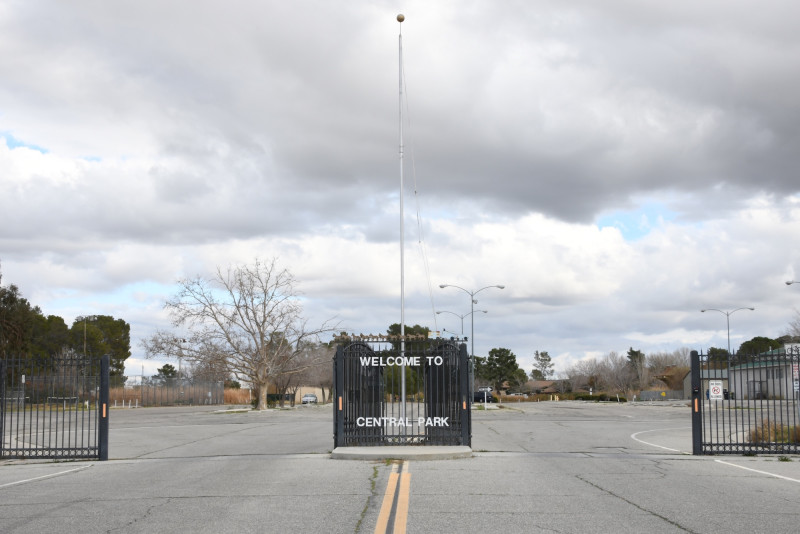
Four miles down the 20 Mule Team Parkway from CoreCivic is California City’s civic core. The parkway’s historic straight line is interrupted by the street grid at Central Park, the city’s primary attraction. Built in the 1960s, the park had a 20-acre lake with a floating public pier, boats, and a contoured landscape with bridges and a scenic concrete waterfall. Though the waterfall no longer functions and portions of the park are closed, the site is still a welcome oasis in this otherwise arid place. All 20 of the mules would have loved it here.
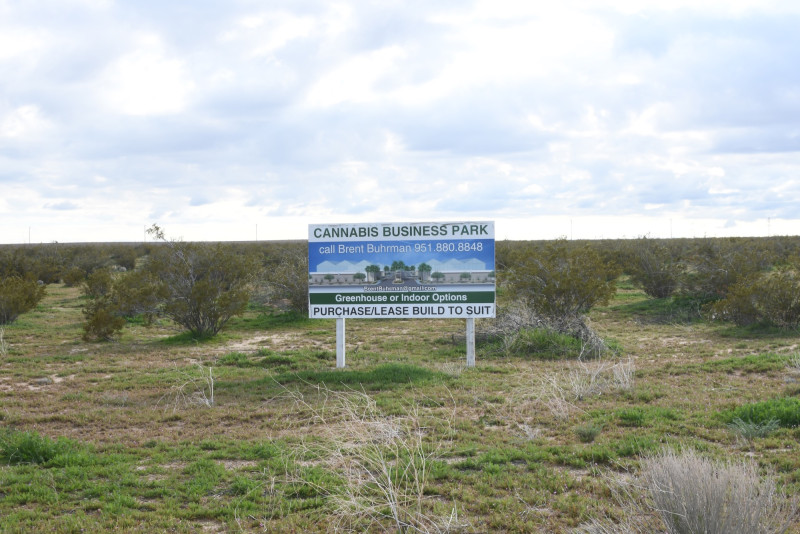
The diagonal path of the old mule team road re-emerges on the other side of the civic core, at Isabella Boulevard, where the grid of new roads peters out, and the old patterns of the desert return again, briefly. Now called Forest Boulevard, the seldom used dirt road runs for seven miles before hitting the fence line around a photovoltaic array next to Highway 58, where the highway makes its great arc around the town of Mojave.
After that the mule path hits the secure fence around Mojave Airport, and is no longer travelled, even by stray ATVs. As a faint vestige, barely visible on the ground, it passes a rocket engine test stand used to develop futuristic aircraft-launched spacecraft, then enters the airport’s famous boneyard, where more than a hundred flightless airliners are being broken apart for parts and scrap.
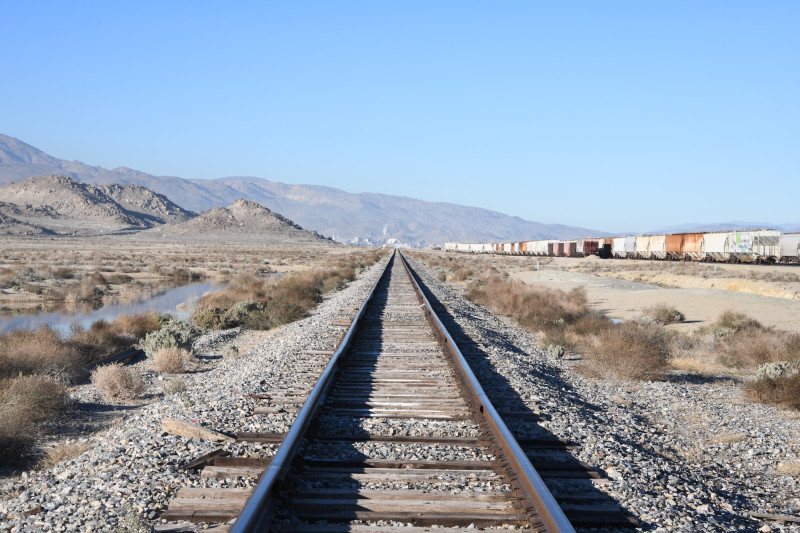
Transplanted by the large paved diagonals of the airport’s runways, the diagonal path of the 20 mule teams is untraceable now, and erased too as it leaves the airport and enters a few blocks of the town of Mojave. The team arriving at the railway would find the old depot, warehouse, and loading platforms long gone, given way to heavily used tracks of the Union Pacific, which thunderously lumbers through town today, hauling everything on earth, including borax.
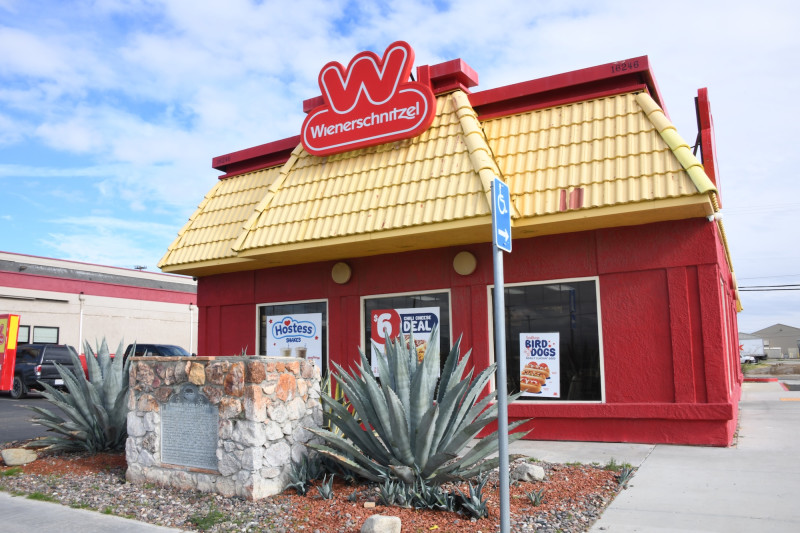
There is a plaque, across from the tracks, commemorating the end of the mule team road. It’s on the commercial strip of Highway 14, in front of a Wienerschnitzel, where the muleskinner there today might have opted for the drive-thru, before heading out on the long trip back to Death Valley. ♦