
Uncritical Minerals
THE CRITICAL MINERALS LIST COVERS half of the elements on the periodic table. This makes one wonder about the elements on the other half of the table. What’s so uncritical about them?
Several elements are gases, and are not on the list because they are captured or generated in abundance in the US through the nation’s widespread network of gas production and petrochemical processing facilities. Located within most oil and gas refineries are gas production subsystems that capture or create various gases to be consumed by the facility or shipped off-site, as part of the elaborate and intermingled chemical production that goes on at these facilities. In some cases, especially for excess gases that are consumed off-site, the subsystem is operated independently, by one of the four big industrial gas companies—Linde, Air Liquide, Air Products, and Messer—that make and market bulk material that is consumed in a gaseous state (as opposed to a solid or liquid form). These industrial gas companies also operate stand-alone cryogenic air-separation facilities across the country, including at other types of gas-consuming industrial facilities, like steel mills.
Hydrogen (Atomic Number 1)
Among the industrially created and consumed gases is hydrogen, number one on the periodic table because it has one proton around its nucleus. It is the lightest and most abundant element in the universe, but despite its ubiquity, it requires quite a bit of technology and a lot of energy to isolate it for industrial use.
Nearly all of the hydrogen produced in the US is made at oil refineries and petrochemical plants, using the steam-methane reforming process, where high pressure and high temperature steam is forced into methane (aka natural gas) and a nickel catalyst, to make hydrogen. This process takes place inside a multi-tubular packed-bed reactor (a series of long narrow tubes that wind around inside the combustion chamber of an industrial furnace, heated to around 1,500 degrees Fahrenheit). Like a continuous contained and controlled explosion, this process produces 10 million metric tons of hydrogen in the US every year, around 15% of the global total.
Every ton of hydrogen produced this way consumes two tons of methane, five tons of water, and six megawatt hours of energy, equivalent to the energy consumption of 200 average American homes over the course of a full day. Six tons of carbon dioxide is produced as a byproduct, most of which is released into the atmosphere.
The majority (around 65%) of the hydrogen produced at these refineries is consumed by these refineries, mostly to make gasoline, but also many other petrochemicals, fuels, and chemical feedstocks. 25% or so is used just to make ammonia, the primary form of fixed nitrogen, which is used in agriculture to feed the world. That leaves around 10% for other uses, including being shipped off-site to other chemical plants and factories that use hydrogen for things like metallurgy, pharmaceuticals, food processing, fuel cells, and rocket propulsion.
Helium (2)
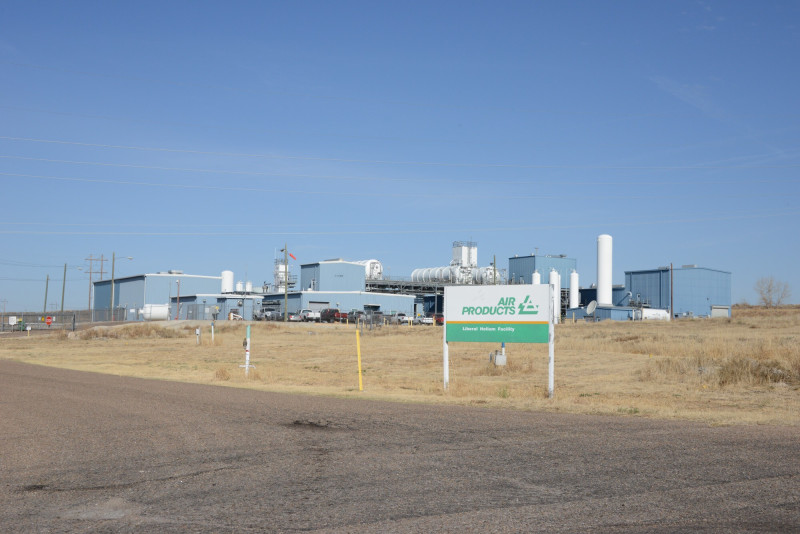
Element number 2 on the periodic table is another light gas, helium, one of the noble gases, meaning that it is stable and doesn’t react much with other elements. Left alone in the atmosphere, helium rises into space and disappears from the planet. To capture it and make use of it, it has to be collected while trapped underground. This is done by extracting it from petrochemical gas wells, operating in deposits where helium exists in addition to the gas, in sufficient amounts to make it worth extracting. These wells are concentrated around southern Kansas and the panhandle of Texas and are connected by pipelines to the federal helium storage center near Amarillo.
The federal stockpile and its related processing infrastructure was established in the 1920s, when helium blimps were essential to naval defense. The stockpile is now run by industrial gas companies, which have since expanded the helium production network. In addition to it’s use as a lifting gas in aerostats and balloons, helium is used in many high-tech applications, such as for cooling superconducting magnets, like those found in MRI machines; growing silicon wafers; and filling vacuums with inert gas. For much of the 20th century, the US controlled the global supply of helium. The US now produces around 68 million cubic meters, less than half the world’s supply, largely because Qatar produces nearly as much as the US.
Other Noble Gases
Neon, argon, krypton, and xenon are other elements not considered critical, that are also inert noble gases, collected at petrochemical refineries, gas processing plants, cryogenic air-separation plants, and steelworks. Neon is still used in electric signage (though LEDs have replaced many neon signs) and is also used in semiconductor fabrication and lasers. Argon shares some of these uses, and is more commonly used for its stable, inert qualities to fill vacuums, as it is less prone to escape and cheaper to produce than other noble gases. Argon gas fills the cases containing the Declaration of Independence and US Constitution on display at the National Archives. Krypton is used in signage, lasers, semiconductors, medicine, and aerospace applications. Xenon is used in some of these ways, but has more uses in lighting, including flash and strobe photography, and is also used as a propellant in satellites and deep space probes.
Oxygen (8)
Oxygen is essential to organic life and, thankfully, still found in abundance in the atmosphere. It is generated for commercial consumption by industrial gas companies at more than 100 air separation plants across the country. It is used in blast furnaces, welding and cutting, rocket fuel, steelmaking, smelting, paper making, chemical production, water treatment, healthcare, and more. Like many other gases, it is transported and stored as a liquid in cryogenic compression tanks and pipelines, substantially reducing its volume. Around 5,000 tons of industrial oxygen is produced and consumed annually in the US.
Nitrogen (7)
Nitrogen is the king of atmospheric gases, forming more than 80% of the earth’s atmosphere, and making plant and animal life possible. Its industrialization changed the world for people, perhaps more than any other single element, and more of it is manufactured than any other elemental gas.
Though nitrogen is abundant in the air, and in rotting organic matter, capturing and controlling it in large quantities wasn’t perfected until the Haber-Bosch process was invented in Germany, in the early 1900s. The process fixes nitrogen in the form of ammonia, produced using hydrogen, derived from natural gas, reacting with nitrogen from the air, in an energy-intensive industrial process which went into widespread use in the US during World War I, to produce explosives, and also set off a global revolution in industrial agriculture, enabling the population of the world to expand exponentially in modern times.
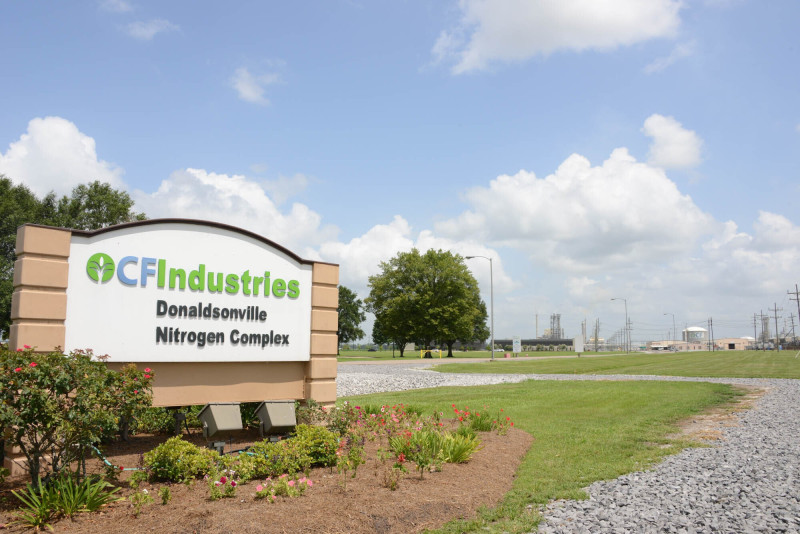
Around 14 million tons of fixed nitrogen in the form of ammonia is manufactured in the US annually. A significant amount of that comes from a single plant in Louisiana, operated by CF Industries, along the Mississippi River industrial corridor. There are around 35 more plants producing the material in the US, operated by CF, Nutrien, Koch, and others. Russia and India produce around the same amount as the US. Only China produces substantially more: 47 million metric tons.
Like nitrogen, ammonia is a gas, which is lighter than air. It is stored and transported in cryogenic pressure tanks, which turn it into liquid form, reducing its volume 850 times. It is transported in this way by refrigerated barges traveling on the nation’s rivers, and by dedicated pressurized pipelines connecting Texas and Louisiana to the midwest. It is moved by rail cars and trucks as well, to distribution nodes all over the country, from where it is trucked to farms, and injected into the ground by machinery.
The US produces around 90% of the industrially fixed nitrogen that is consumed by agriculture and industry in the US, and has the capacity to produce more. Some of it is exported, and some is imported too. Clearly nitrogen is a critical mineral, but so long as the US can produce all it needs domestically, and doesn’t run out of natural gas, it is unlikely to be found on the official critical minerals list.
Chlorine (17)
Chlorine is another mega-gas, with more than ten million metric tons produced in the US annually. 95% of chlorine is produced by the chlor-alkali process, where chlorine is the key element in a family of manufactured chemicals distinct from petrochemicals, as it uses salt (sodium chloride) and electricity for its production, and not hydrocarbons like methane (natural gas).
While chlorine by itself reacts violently with petroleum products, chlor-alkali chemicals are often combined with petrochemicals like ethylene to make plastics, notably PVC (polyvinyl chloride), a class of plastics used in pipes, packaging, bags, sheeting, building materials, cables, conduits, clothing, toys, and more. Chlorine is also combined with petrochemicals to make synthetic rubber, solvents, and pesticides. On its own chlorine is best known for its widespread use in water purification.
Because of its frequent mixing with petrochemicals, chlor-alkali plants are often co-located or adjacent to petrochemical plants, especially in Texas and Louisiana. They are often distinctly owned and operated, not an oil company subsidiary, and manufacture most of their products on site. There are 49 or so chlor-alkali production plants around the US, many of them owned by Olin, OxyChem, and Westlake.
When liquified chlorine gas is sold in bulk and shipped to other manufacturers and industrial customers, it is in specialized pressurized rail cars, as it is both volatile and toxic. Chlorine is remembered for its historic use as a chemical weapon, and for its connections to harmful chemical agents such as PCBs, DDT, Agent Orange, and other dioxins.

Uncritical Minerals From the Ground
Critical or not, most elements on the periodic table are solids, not gases, and are collected from minerals found in the ground, including petrochemicals, rather then extracted from the air. Some of them can be found in abundance in the US, are easy enough to extract and ship, and are likely to stay off the critical minerals list for the foreseeable future.
Sulfur (16)
Once mined extensively in the US for use in chemicals and fertilizers, the last sulfur mine closed in 2000, as sulfur is produced in abundance by oil and gas refining and metals smelting. Every refinery processing crude oil and gas produces sulfur as a byproduct, and 150 or so facilities in the US collectively generate more than eight million metric tons of sulfur annually. The US is the second largest producer of sulfur in the world, following China, which makes more than twice as much. Russia and Saudi Arabia, with all of their refineries, are tied for third.
In the US, captured sulfur is usually shipped and consumed in the form of sulfuric acid, most of which (around two thirds) is used to manufacture phosphate fertilizers, generally in the form of phosphoric acid. In the US, most of that takes place in the phosphate mines and production plants east of Tampa, Florida. Sulfuric acid is used in the process, but much of it is not consumed into the final product, remaining instead in large and mildly radioactive phosphogypsum (calcium sulfate) waste stacks around the plants and mines.
The remaining third or so of sulfuric acid not destined for phosphate fertilizer is used in many industrial applications, including in batteries, metal refining and metal pickling, dyes, detergents, explosives, textile and paper making, and petroleum refining. Like nitrogen, the amount of sulfur produced in the US is limited only by the amount of petrochemicals that are produced domestically, especially gasoline, since that accounts for almost half of every barrel of oil consumed.
Sodium (11)
Sodium is plentiful, found in salt deposits of various types, and mined depending on the type of sodium compound that is being processed from the deposit. Sodium chloride for food and industrial use is made from solar evaporation ponds next to salt lakes and impounded bays in Utah, California, and Arizona, though more is mined from large underground deposits, found in several states, including Kansas, Louisiana, Michigan, Ohio, New York, and Texas. Top companies in this industry are Cargill and Morton.
The US produces around 40 million tons of salt a year. 40% of it is used as a de-icing agent on roads. Another 40% is used by chemical industries, where much of it is used to make chlorine and caustic soda, feedstocks for other chemicals. Food processing uses about 4%. Only China produces more salt than the US.
Sodium in the form of soda ash (sodium carbonate, also called trona) is used in glass, soap, metallurgy, and many chemical applications, such as adhesives, paper, and food processing. It is mined from dry lakes in California (Owens and Searles), but most of it comes from Green River, Wyoming, where since the 1950s, four large underground mines extract 90% of the soda that is produced in the US, around half of the world’s supply.
Calcium (20)
Calcium is another plentiful element mined all over the US for different mineral compounds. Calcium oxide, extracted from pits, makes up the majority of the typical cement mixture used as a construction material. There are around 100 cement plants in the US, in 34 states, that produce around 85 million tons of cement every year. Plants in Texas, Missouri, California, and Florida account for nearly half of it. The US ranks fourth in cement production globally, with Vietnam producing 110 million tons, India 420 million tons, and China producing two billion tons, more than 20 times as much as the US.
Calcium oxide is also the prime ingredient in lime, which is classified as a separate commodity, primarily used in steelmaking, and in the manufacture of fertilizer, glass, paper, pulp, and sugar. 16 million tons of it is produced annually in the US, by more than 70 industrial plants in 28 states, with most production coming from Alabama, Missouri, Ohio, and Texas.
Calcium sulfate is gypsum, which is mined all over the US and used for drywall, fertilizer, cement, and other products. The US is the largest producer and consumer of gypsum, making 22 million tons of it annually, and consuming 44 million tons (the missing half comes mostly from Spain, Mexico, and Canada). There are around 45 gypsum mines in 15 states, principally California, Iowa, Kansas, Nevada, Oklahoma, and Texas.
Iron (26)
A number of elemental metals are mined in large enough quantities domestically that they are not on the critical minerals list (yet). These include iron, which is used primarily to make new steel, as opposed to steel that is made from scrap, which most of it is these days. 90% of the iron needed to meet domestic consumption comes from seven or so mines in Minnesota’s Mesabi Range and Michigan’s Marquette Range, and is shipped directly to the steel plants along along the shore of Lake Michigan, and to other inland plants. A few other smaller iron mines, including some in the southwest corner of Utah, provide most of the rest.
Total production of iron in the US is close to 50 million metric tons per year, which is primarily used to make the 80 million tons of raw steel produced annually, at the nation’s dozen or so integrated steel mills, mostly owned by Cleveland-Cliffs or U.S. Steel, as well as from around 100 mini-mills that produce steel from scrap. The US is considered a major raw steel producer, currently ranked fourth in the world, behind Japan, India, and China, which produces more than ten times as much.
Gold (79)
The US is currently the fifth largest gold-producing nation, generating around 165 metric tons annually (behind Canada, Australia, Russia, and China, which alone produces more than twice as much). 70% of it comes from Nevada, mostly from three mines in the north central part of the state. Alaska, Colorado, Arizona, Idaho, South Dakota, and California are among the other states with active gold mines.
Half the gold consumed in the US is for jewelry and ornaments. However around 25% is used in industrial applications, such as electronics and coatings. Another major use, which varies according to gold’s highly fluctuating value, is banked currency, stashed away in safes and vaults, public and private.
The US government holds what is considered to be the largest amount of “monetary” gold in the world, with more than 8,100 metric tons at five locations: Fort Knox, West Point, the Denver Mint, the Philadelphia Mint, and the Federal Reserve Bank of New York, which with more than 6,300 metric tons, is the largest known stockpile of gold in the world. The gold there, stored on bedrock, 80 feet underground at its offices in Manhattan, is owned by others, not the US government, and is held there for safekeeping. The current value is more than a trillion dollars.
Molybdenum (42)
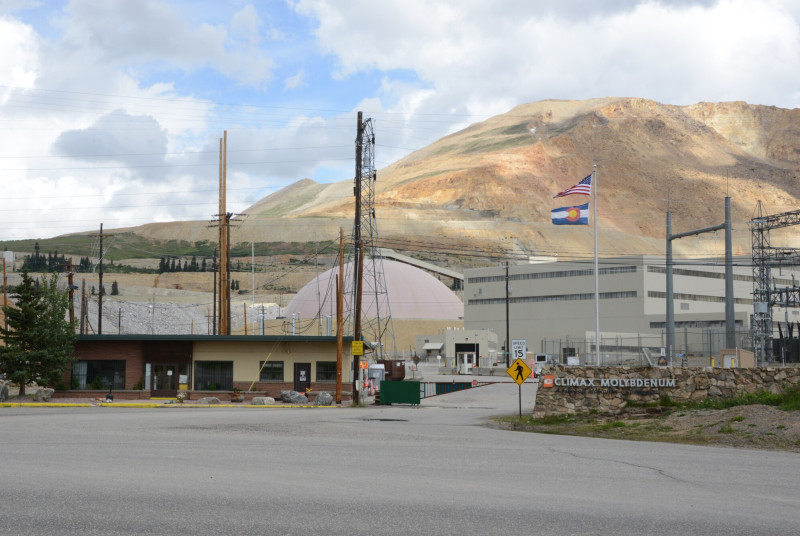
The US is a major global producer of molybdenum, behind only Peru, Chile, and China. Most of it comes from two mines in Colorado, owned by Freeport-McMoRan. One, the Climax Mine, near Leadville, was the primary source of molybdenum in the world for many decades. In World War II, molybdenum was considered an important strategic resource, as it was used to make hardened steel for everything from aircraft engines to armor plating. Most of the nation’s supply at that time came from this mine. By 1957, Climax claimed to be the largest underground mine in the world. It expanded as an open pit in the 1960s.
In 1976, the company opened a major underground operation at the Henderson Mine, 30 miles away, which is now the largest molybdenum mine in the nation, producing more than a billion pounds of molybdenum since opening. Molybdenum is also produced as a byproduct at copper mines in Arizona, Montana, Nevada, and at the Bingham Canyon Copper Mine in Utah, still called the biggest man-made hole on earth.
Around 33 thousand metric tons of molybdenum ore is produced annually in the US, around half of which is consumed domestically to produce hard metal alloys. Some is also used in chemical applications, including as catalysts, lubricants, and pigments.
Iodine (53)
The US is the third largest global producer of iodine, an element that, while not officially critical, has some critical functions. Two thirds of the world’s iodine comes from desert nitrate mines in Chile, around 20,000 metric tons of it. Gas fields in Japan produce around half that amount. The US produces around 1,200 metric tons, from a subterranean brine pool in northwestern Oklahoma that has been the nation’s only domestic source of raw iodine since the 1970s. The Iochem Corporation and Woodward Iodine Corporation operate iodine-rich brine extraction plants in the region.
Iodine is used in X-ray imaging, medicine, nutrition, LCD screens, and as a catalyst in various chemical processes. It also has some high-tech and military uses, such as laser weapons. Iodine is in potassium iodide pills, in some emergency kits, to be ingested to mitigate the effects of being exposed to high levels of radiation.
Bromine (35)
Like iodine, bromine is extracted from saline deposits. It can be extracted from sea water, but inland subterranean brine deposits can have higher concentrations of it, and be more cost effective. Israel’s Dead Sea is the world’s largest source, followed by brine wells in the US. Bromine is used as fire retardant in furniture, electronics and textiles, and as a disinfectant in water treatment, in place of chlorine. It is used in industrial chemical production, pharmaceuticals, drilling fluids, pesticides, plastics, and batteries.
Currently domestic bromine is produced exclusively from wells in the Smackover Formation, an old oil field in southern Arkansas. Two major companies operate there, producing around 225,000 metric tons of the material per year, which is around 30% of the global total. The Albemarle Corporation is centered around the town of Magnolia, where it operates brine extraction plants and a network of more than 230 miles of pipelines and 145,000 acres of leased land. LANXESS, a German chemical company, operates a network of wells and plants around the town of El Dorado. Both companies, and others, are also exploring the extraction of lithium from Smackover Formation brine.
Selenium (32)
Selenium is one of several elemental minerals that are produced as a byproduct of processing other minerals. It is an element with a wide variety of uses, in metallurgy, glass manufacturing, agriculture, chemicals and pigments, electronics, batteries, and other applications, including dandruff shampoo. It is produced as a by-product of mineral processing, mostly electrolytic copper refining, where it is sourced from copper anode slimes.
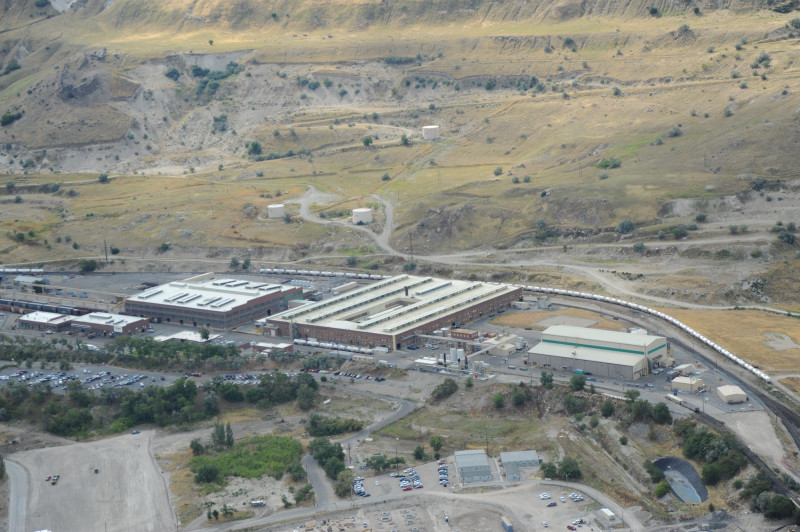
Somewhere around 2,000-3,000 metric tons of selenium is produced globally annually, though a precise amount is hard to determine as China consumes most of what it produces, and US companies consider its production amounts proprietary information. But since the US is usually ranked as the fifth largest copper producer in the world, behind Chile, China, Peru, and the Democratic Republic of Congo, it is likely a significant producer of selenium. It would come principally out of the two electrolytic primary copper refineries in the US: one in Miami, Arizona, operated by Freeport-McMoRan, the largest US copper producer; and the other in Utah, connected to the Bingham Canyon Mine, owned by Rio Tinto.
Osmium (76)
Osmium is another element that is primarily produced as a metal-refining byproduct, in copper and nickel refining, and the processing of platinum-group metals (PGMs), which are domestically mined in the Stillwater Mountains in Montana, and a few other locations. Very small amounts of osmium are consumed domestically though, using domestically produced, or, more likely, imported osmium from South Africa, Russia, or Canada. Less than a thousand pounds is produced globally annually, as it is rare and its qualities are shared by other metals. When osmium is consumed, it is as a hard metal alloy in high-wear applications.
Cadmium (48)
Cadmium is primarily sourced as a byproduct of zinc smelting, and the nation’s only primary zinc smelter, located in Clarksville, Tennessee, generates around 300 metric tons a year. Though the US has a large zinc mine in Alaska, its ore is smelted in Canada. Secondary cadmium is sourced from scrap in the US, primarily from spent nickel-cadmium batteries. Cadmium is used mostly in nickel-cadmium (NiCd) batteries, but is also used in metal alloys, coatings, pigments, solar panels, and semiconductors, though not in a high quantity. The US is not a major producer of cadmium, so most cadmium consumed in the US is imported. Around 25,000 tons are produced annually globally, chiefly by China, Korea, Canada, and Japan.
Strontium (38)
Some once important elemental minerals are not being produced domestically at all anymore, yet remain off the critical list. Strontium has not been produced in the US since 1959. It is extracted from celestite ore, which the US imports from Mexico, in small quantities, around 1,000 tons a year. In the US, strontium is used primarily as an oil and gas well drilling fluid additive. Other nations use it to make powerful ceramic ferrite magnets. It also has uses in ceramics, glass, pyrotechnics, and medicine. As much as 500,000 tons is produced globally, mostly in Iran and Spain. Radioactive strontium-89 is produced at the Oak Ridge National Laboratory in Tennessee.
Mercury (80)
Mercury was heavily used in relays, paints, batteries, lighting, thermostats, and gold mining, but due to its toxicity to humans, it has not been mined as a commodity in the US since 1992, and its use is discouraged. Quicksilver mines in New Almaden and New Idria, California were major historic sources of mercury until the 1970s, when the use of mercury in gold mining was banned, and demand dropped considerably.
Since then, mercury has been recovered as a byproduct from processing gold and silver ore at some mines in Nevada, and more has been recovered from old batteries, fluorescent lamps, dental amalgam, medical devices, mercury switches, and contaminated soils. One of the largest sources of mercury is in the form of emissions from coal fired power plants, but most of that escapes into the atmosphere.
The Department of Energy has designated repositories for elemental mercury, including at the toxic waste site managed by Waste Control Specialists, near Andrews, Texas, which may hold up to 6,800 metric tons of mercury in a special storage building. More than 1,000 metric tons is held at the DOE site at Oak Ridge, Tennessee, for defense purposes (mercury is used in nuclear weapons). Though mercury exports from the US has been banned since 2013, some exceptions have been made, and specialized uses of the material continues using mercury imported into the US, primarily from Canada.
Thallium (81)
The element thallium is harvested as a byproduct in copper, lead, and zinc processing, and is highly toxic to humans. It has not been produced in the US since 1981, though other nations, primarily China, Kazakhstan, and Russia may produce as much as ten tons of it a year, collectively. It has uses in gamma radiation detection, high-temperature superconductors, infrared optical materials, photocells, and radioisotopes. With the atomic number of 81, thallium is on the upper end of the periodic table, where things begin to be more radioactive.
Radioactivity and the Decaying End of the Periodic Table
Things begin to decay radioactively at the higher end of the periodic table. 36 of the 59 “uncritical” elements are radioactively unstable, and therefore a bit tricky to produce, process and consume. Naturally radioactive elements include polonium (atomic number 84), which, like many others, occurs in small amounts as a byproduct of the decay of uranium; astatine (85), which is uncommon outside of laboratories, and is used in medicine; radon (86), a common and sometimes dangerous naturally occurring radioactive gas that has limited industrial production or medical use anymore; francium (87), which has a 22-minute half-life and is only used in labs; radium (88), which was mined from the Colorado Plateau in the early 1900s, and processed by companies like the US Radium Corporation of New Jersey into products such as glowing paint for watch dials; actinium (89), a rarely occurring or used radioactive element; thorium (90), which has been used in the nuclear power industry, in glass production, and in consumer products, such as the mantles in gas camping lamps, mostly phased out in the 1990s; protactinium (91), occasionally used as a radioactive tracer in field science; and uranium (92), by far the most mined and processed radioactive element because of its usefulness in energy production and weapons, when enriched, and transformed into various isotopes. It was added to the critical minerals list in 2025.
There are also two radioactive element outliers with lower atomic numbers: technetium (43) which is a radioisotope made from molybdinum that is used in medicine; and promethium (61), which is the only one of the 17 rare earth elements that is not on the critical minerals list, and is chiefly made in very small amounts into isotopes in research reactors.
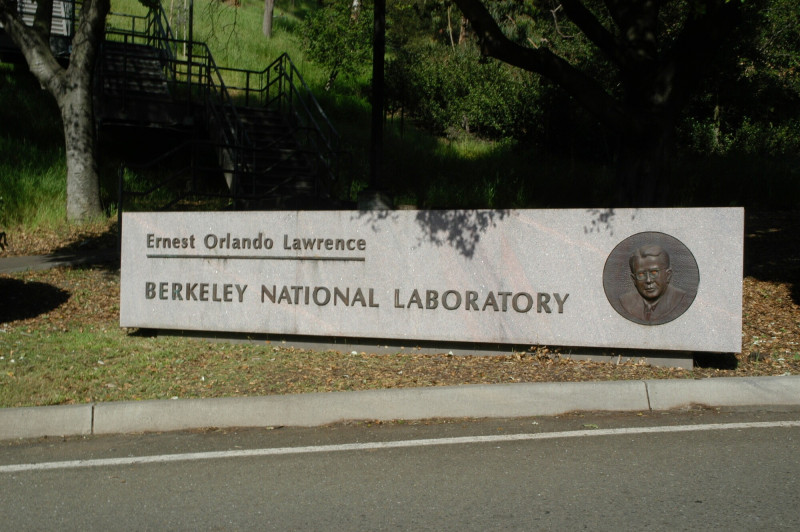
Radioactive elements with atomic numbers higher than uranium (92), referred to as transuranic, are mostly synthetic, generated in small quantities inside laboratories, particle accelerators, or highly specialized production facilities. These include plutonium, berkelium, californium, nobelium, lawrencium, and livermorium, names that reflect the importance of UC Berkeley’s cyclotron in atomic science. The final element on the period table is oganesson, with atomic number 118. Fewer than ten atoms of which have ever been produced. It too is a gas. ♦